
Tift County Busted Mugshots Basics
Every booking at Tift County Jail starts the same way. An officer brings someone in. The jail logs the details. A typical entry can include the person's name, an identifier, the arrest time, the arresting agency, charges as entered, bond status, custody status, physical descriptors, and a booking photo when one is lawfully available. The Sheriff's Office runs the jail at 500 Morgan Drive in Tifton. Several agencies generate the paperwork on the arrest side, including Tifton Police, Omega Police, and the sheriff's own deputies. The jail keeps the county's custody record.
Who sits in this jail? Mostly people awaiting trial. The facility also holds those serving local sentences of up to a year, plus others waiting on a transfer to state custody. That mix matters when you scan a roster. Someone listed today may have been arrested weeks ago, so a fresh entry and a long-term hold can look the same at a glance.
The volume is bigger than one screen suggests. A public presentation reported 2,464 bookings and 2,698 releases in a single year, with roughly 200 people held on an average day. Tifton Grapevine reproduced the report, which is not an audited jail dataset. The figures describe reported activity, not unique people.
Tift County Booking Record Fields
A booking record tells you what the jail received and when. Older public versions of the Tift roster listed the person's name and status, sex, height, weight, arrest date and time, days in jail, arresting officer, and bond amount. Today's Offender Index shows many of those same fields. It goes further, too. It pulls in charge details, sentence information, release data, visitation rules, and inmate particulars whenever the system has them.
Expect gaps. Fields can sit blank, lag behind, or get revised later. A charge shown at booking reflects the intake description, which may not match what a prosecutor eventually files. Bond amounts and court dates also shift after a first appearance. For current custody status, trust the live lookup. When you need an exact copy of a record, request the underlying document itself.
| Field | What it can show |
|---|---|
| Booked name and aliases | The identity entered at intake. Check spelling and suffixes before treating a match as the same person. |
| Booking or inmate number | The jail identifier that helps the records unit locate the right file. |
| Arrest date and time | When the arrest and intake were recorded. Processing can occur after the physical arrest. |
| Arresting agency and officer | The agency tied to the arrest paperwork, such as Tifton Police or Tift County Sheriff's Office. |
| Charges as booked | The counts, statute references, description, type, warrant number, and court fields configured in the result details. |
| Bond and custody status | Total bond or no-bond information, days in jail, current status, sentence, or release details when supplied. |
| Physical descriptors | Sex, height, weight, age, and other identifiers shown by the live system. Some fields may be off. |
| Booking photograph | An intake image where supplied and legally releasable. The portal does not promise that every result has one. |
A Tift County booking record covers a narrow slice of information. It shows who was processed at the jail and when. Think of the mugshot as an identification tool, nothing more. The file simply documents that intake happened.
Requesting Tift County Booking Records
Sometimes an online search comes up empty or points to the wrong person. That is when you go to the source. The Tift County Sheriff's Office Support Services unit handles open-records requests. Public Information Officer David Haire is the named contact, with Captain Chad Davis as his alternate. The sheriff's public information and records directions spell out the office routes, and the county records request form includes the older return details.
Keep the request tight. Name the file you want, whether that is a booking sheet, a jail intake record, or a booking photograph. Include a full name, a rough booking date, the arresting agency, and a booking number if you have it. Staff can tell you whether Georgia law requires a photo affirmation or whether an exemption applies. One limit to remember: the office only has to hand over records that already exist. Nobody there will write a new report or walk you through a case.
- Write the person's full name, known alias, approximate arrest or booking date, agency, and any booking number.
- Ask for the booking sheet, jail-register entry, release record if relevant, and booking photograph as separate requested items.
- Send the request to David Haire at P.O. Box 46, Tifton, GA 31793, or use david.haire@tiftcounty.org or fax (229) 388-6200 as listed on the form.
- State that electronic delivery is acceptable and ask for a cost estimate if the request will take substantial staff time.
- Keep the response, any exemption citation, and the exact record supplied. Follow up with the agency that owns any court, state, or federal record.
| Request detail | Published Tift framework |
|---|---|
| Ordinary paper copies | No more than $0.10 per page under the stated open-records framework. |
| Administrative work | The first 15 minutes are free, then the prorated rate of the lowest-paid qualified full-time employee plus direct costs. |
| Response | Georgia's Open Records Act generally calls for a response within three business days, with production or an explanation and timetable when immediate production is not feasible. |
Contact card: Tift County Sheriff's Office, 500 Morgan Drive, Tifton, GA 31793. For jail information, call (229) 388-6020. Reports and warrants go through (229) 388-6021. Administrative hours run Monday through Friday, 8:00 a.m. to 6:00 p.m.
How far back do these files go? Georgia Archives sets a minimum retention of 10 years after release for jail booking records. That rule governs record keeping, though, not what stays viewable online. An older arrest file may sit in an active system or in an older repository, so ask Tift Support Services which one holds it. Sealing, restriction, juvenile confidentiality, and redaction can also limit what you receive.
Note: A three-business-day response is not a promise that a large booking-record request will be fully copied by that date.
Georgia Mugshot Law and Removal
Georgia's Open Records Act, O.C.G.A. §§ 50-18-70 through 50-18-77, favors access while setting request, copying, timing, and exemption rules. The Georgia Attorney General's Open Government portal explains the process, and the official Georgia Code gateway is the starting point for current statutory text.
O.C.G.A. § 35-1-19 defines a booking photograph and generally limits an arresting agency or its agent from posting that image on a website, subject to listed exceptions. It does not mean every booking record is secret. It means a Tift County online roster should be described as a custody and record interface without promising a photo for every person. A specific image may require a request and a statutory affirmation.
O.C.G.A. § 10-1-393.5 creates a free written removal path for qualifying commercial booking-photo publication after outcomes such as restriction, sealing, dismissal, nolle prosequi, or acquittal, when the statutory conditions are met. The Georgia Consumer Protection Division's mugshot guidance explains the request and complaint route. News and commentary exceptions matter, so no publisher outcome should be promised in advance.
Several Section 20 publishers describe their own no-fee routes. Busted Newspaper's request form asks for a listing URL and qualifying legal documents and estimates five to ten days for review. RecentlyBooked's policy lists no-fee requests for qualifying dismissed, restricted, sealed, inaccurate, outdated, wrong-person, juvenile, or duplicate entries. Mugshots.com's record-maintenance policy describes no-charge review for specified restriction, seal, identity, and disposition records. The Georgia Gazette's request route is also a publisher process. These policies apply to the publisher's own page and do not remove the originating sheriff or court record.
Georgia calls its process record restriction. The Georgia Bureau of Investigation guidance explains eligibility and routing. Restriction does not automatically erase a court file, a historically accurate jail record, or an independent republication. Obtain the court disposition, follow the current GBI or prosecutor instructions, and ask Tift County which record can be corrected or limited.
After an originating page is lawfully changed or removed, Google's outdated-content refresh tool can update a stale search result. It cannot force the source to remove a record. Do not pay a vendor promising a guaranteed deletion. Start with the agency, court, qualifying publisher process, and documented source change.
Juvenile matters, victim information, medical material, personal identifiers, sealed records, and active investigative material may be withheld or redacted. A request should not be used to seek confidential juvenile material.
Georgia law is easiest to apply when three tasks stay separate: correct or restrict an official record, use the free statutory process for a qualifying commercial republication, and refresh a search cache after the source changes.
The Georgia Attorney General's open-government resource is the source behind this law and records-request reference.
The Attorney General's open-government resource is the official starting point for understanding how a Tift County records request is handled.
The Georgia Consumer Protection Division's mugshot guidance is the source for the qualifying publisher-removal route.
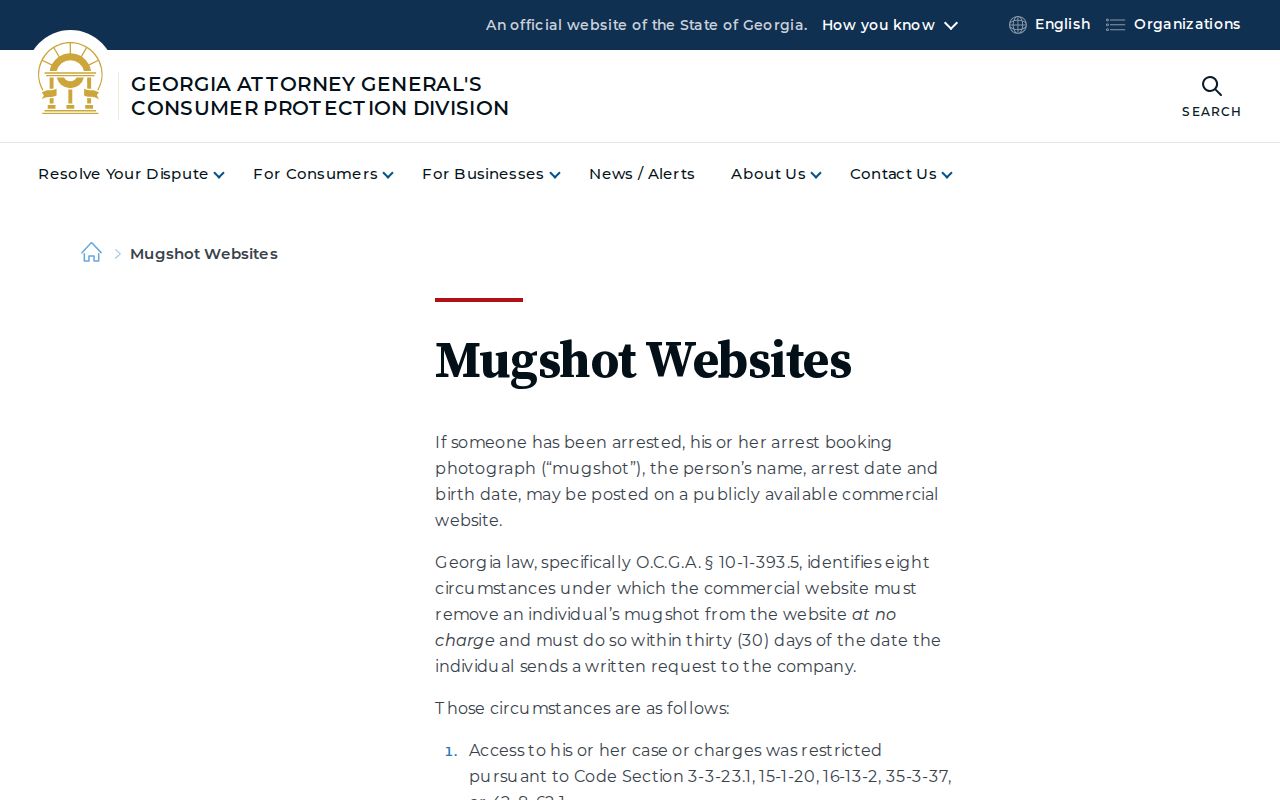
The consumer guidance concerns qualifying commercial publication. It does not replace a request to Tift County or a court disposition.
Find Tift County Busted Mugshots
Custody status decides where to look. Someone booked in the last day shows up in the last-24-hours intake view. A person still held at Tift County Jail appears under Current Inmates. A recent release lands in the sheriff's 48 Hour Release view. State-sentenced people move to the Georgia Department of Corrections search. For whatever happened after booking, the court docket is the answer.
Go through official channels first. Then file a request when the public interface comes up empty. A blank result has many explanations: release, transfer, processing lag, a spelling variation, a booking in a different county, a restricted record, or a history filter problem. It does not mean no arrest ever occurred.
- Open the Tift County Sheriff's current-inmates landing page and follow its link to the sheriff-designated Offender Index.
- Choose Bookings Made in the Last 24 Hours for recent intake, or Current Inmates for people the system currently marks held.
- Choose Inmates Sorted by Booking Date for a selected range and enable Include Previous Inmates when looking for a person no longer held.
- Check the sheriff's 48 Hour Release view for a recent departure.
- Request the booking sheet or photo from Tift Support Services if the online result is missing or incomplete.
- Use GDC, the court provider, BOP, or ICE only when the person's custody path has moved beyond the county jail.
Identity: A similar name or a lookalike photo is not enough to pin down a person. Match the identifiers, the arresting agency, the booking date, and the court record before drawing any conclusion.
Where Tift County Busted Mugshots Appear
Different sources answer different questions. For local custody, the sheriff and jail come first. Courts own the disposition, and the GDC owns state-prison records. News outlets pick which stories to cover, and unofficial indexes can be faster or older than the official ones. Those indexes can also be incomplete, delayed, duplicated, stale, or flat wrong. Nothing below replaces the originating agency and the court.
| Channel | Photo or record | Custody slice and access |
|---|---|---|
| Sheriff-designated Offender Index | Photo data is configured in result rows, but availability is not guaranteed. | Current inmates, last 24 hours, and booking-date history. Official county gateway points here. |
| TCSO 48 Hour Release | Sparse release view, with no photo promise. | Recent releases, not every booking or current inmate. Use the sheriff-hosted mobile page. |
| Sheriff app | Inmate lookup and safety information are documented; the current store copy does not promise photos. | Mobile custody, tips, and public-safety updates. Features can change. |
| Georgia DOC search | GDC offender profile may show a state photo. | State-sentenced custody, not ordinary Tift pretrial intake. |
| Tift courts and clerk | Case filings and disposition, not a county jail roster photo. | After-booking legal outcome through the clerk or Georgia Courts E-Access. |
| Records request | Booking sheet and a specific photo can be requested from the custodian. | Best fallback for an omitted, released, or older county record. |
| Tifton Gazette and WALB | Selected news stories may use agency-supplied images. | Event-driven reporting, not a complete arrest list. |
| Busted Newspaper, RecentlyBooked, Mugshots.com, and Arrests.org | Unofficial republications vary. RecentlyBooked's Tift page says the county does not provide mugshot images. | Secondary county indexes with different windows and freshness. Verify every item with TCSO and the court. |
| The Georgia Gazette | Private republication with booking images and details. | Selected or rolling booking entries, not an official custody source. |
JailExchange also has a Tift County jail guide that mainly routes users toward official channels. It is useful for orientation, but its generic language cannot override what TCSO or the live Offender Index shows. Mugshots.zone had no verified Tift section in the research and should not be assigned a made-up local URL.
The official sheriff roster gateway sends current-inmate searches to the designated Offender Index.
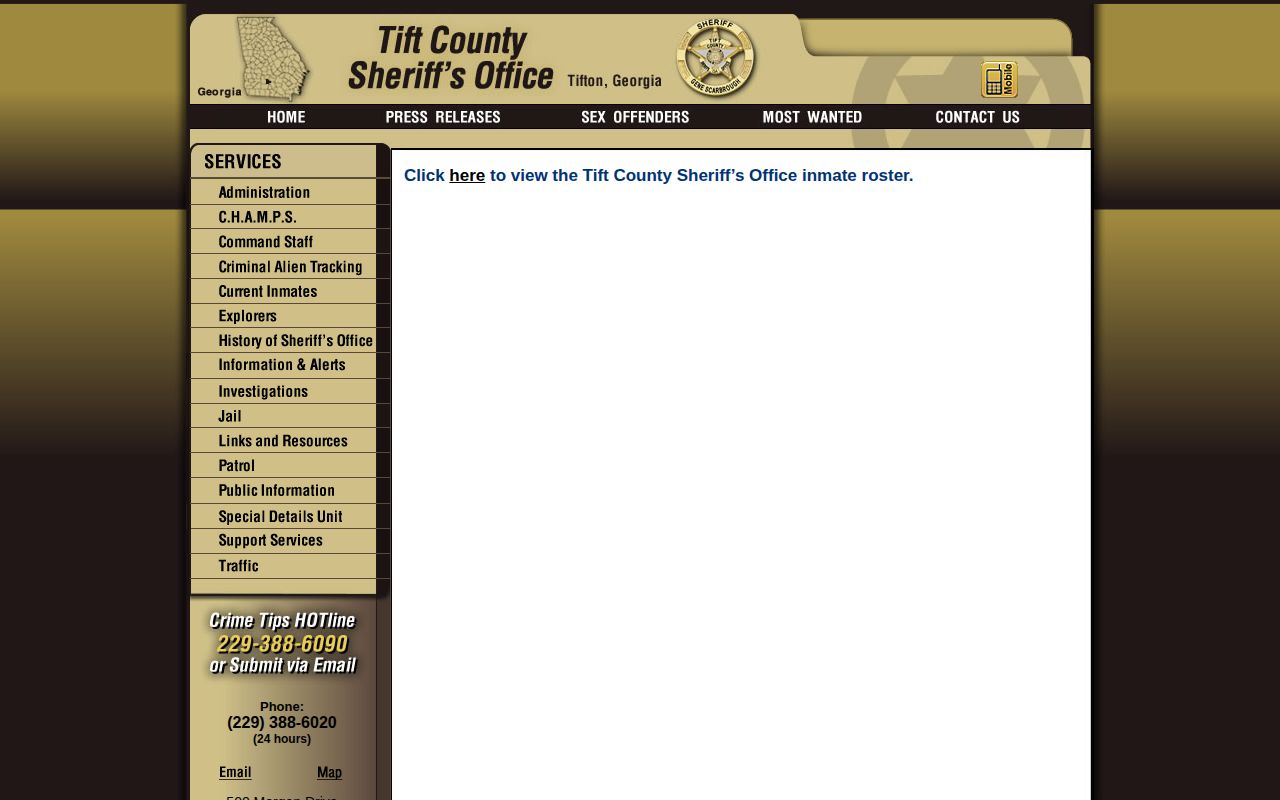
The sheriff's landing page is the official bridge to the current custody search, even though the linked interface is hosted on a separate domain.
Tift County Busted Jail Roster
Three search modes make up the sheriff-designated Offender Index. The first mode, Current Inmates, shows who the system lists as held right now. A second covers bookings from the past day only. The third, built around booking dates, lets you enter a From and To range and adds an option called Include Previous Inmates In Search. Leave both date boxes empty and the portal describes the result as an all-inmates view, though it also warns that sweeping searches can run slowly.
Each result row can carry plenty of detail. Name and booked status come first, followed by sex, height, weight, arrest date and time, days in jail, arresting officer, total bond, inmate ID, and age. Charge fields expand into warrant number, counts, statute, description, type, and court when configured. Sentence, release, and visitation data may appear too. Address, date of birth, and history fields were not active. A blank field simply means nothing was entered there.
| Search mode | Use it for | Limits |
|---|---|---|
| Current Inmates | People the system currently marks in Tift County Jail. | Release, transfer, lag, spelling, or another county can remove a result. |
| Bookings Made in the Last 24 Hours | New intake in the portal's rolling or system-defined 24-hour window. | Not the same as a calendar-day arrest log; processing may lag the arrest. |
| Inmates Sorted by Booking Date | A date range, with an option to include previous inmates. | No maximum public history or refresh schedule is promised. |
- Start at the sheriff's official roster link so a vendor address change does not strand the search.
- Pick the custody question first, then enter a first name, last name, or date range.
- Widen the spelling and date range if a known booking is absent; select previous inmates for released records.
- Read the fields as operational jail data, not as a complete court history or a finding of guilt.
- Call (229) 388-6020 or submit a records request when the result remains unresolved.
The sheriff has not published a written completeness, correction, or takedown policy for the current photo display. The template is configured to supply a base64 JPEG in result rows, but a missing image can occur. Georgia's § 35-1-19 framework also limits how an arresting agency publishes booking photographs. Do not describe the roster as a guaranteed photo gallery.
What if a person is not in Current Inmates? Check the last-24-hours and booking-date views, select previous inmates, and review the 48 Hour Release page. Release, transfer, processing lag, spelling, a different booking county, or a restricted record can all explain a blank result.
The current-inmate Offender Index view is the official-designated interface for present Tift County custody.
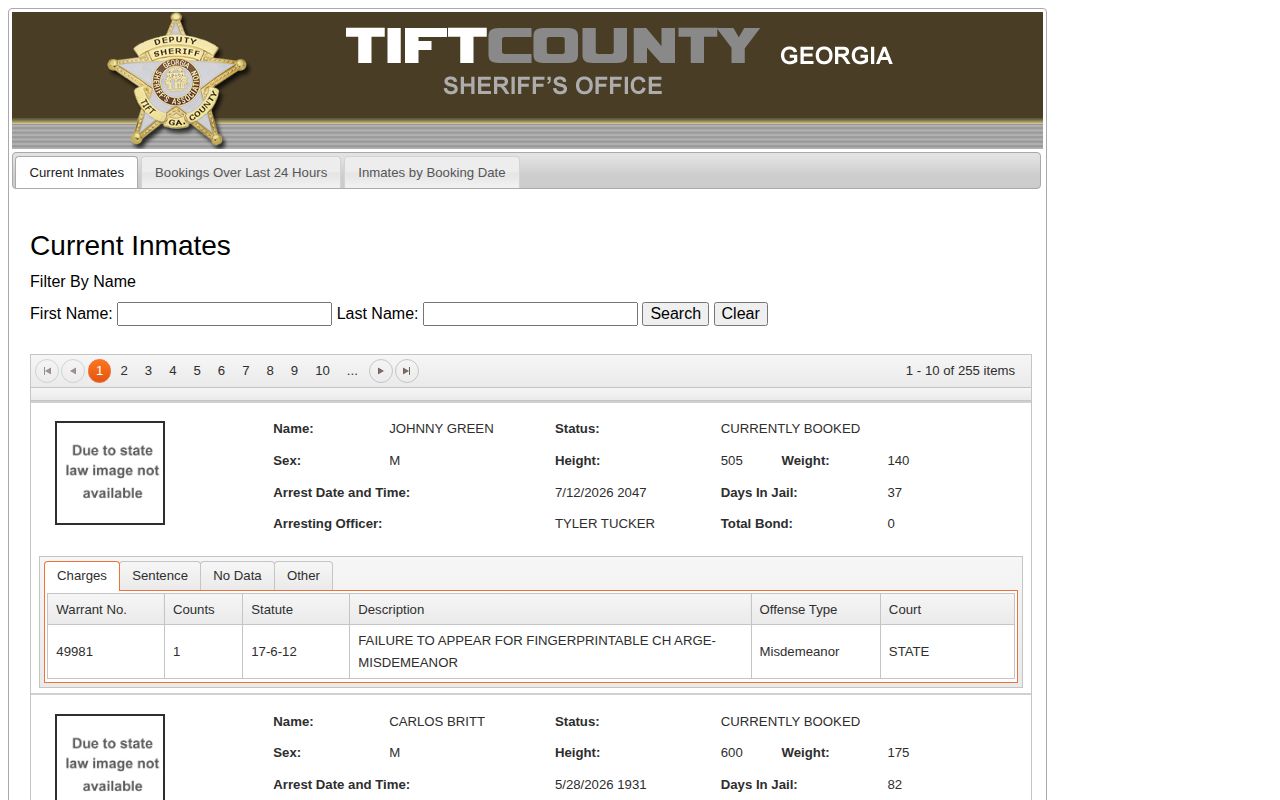
The current-inmate view is one custody slice. Use the last-24-hours and booking-date modes when the question concerns a new or released booking.
Note: The public interface gives no official refresh interval, so describe changes as updates from jail data rather than guaranteed real-time posting.
Recent Tift County Busted Bookings
The portal calls its recent-intake tool Bookings Made in the Last 24 Hours. First and last name filters are available. Read it as a rolling one-day window rather than a midnight-to-midnight police blotter, and note that no separate 48-hour booking list exists. The older sheriff mobile view labeled 48 Hour Release answers a different question entirely: who left custody during that release period.
For multi-day searches, use the date-history tool. Pick From and To dates, then switch on Include Previous Inmates In Search once the person is no longer in custody. The interface defaults to roughly the prior month through today, accepts other dates, and states that blank dates show all inmates. No fixed maximum history is promised. Broad searches may run slowly.
| Question | Official view | What it does not prove |
|---|---|---|
| Who entered recently? | Bookings Made in the Last 24 Hours | It does not show every arrest in a calendar day or every photo. |
| Who was booked during a range? | Inmates Sorted by Booking Date | It does not promise unlimited historical availability. |
| Who left recently? | 48 Hour Release | It does not show case outcome, guilt, or every person released after another transfer. |
A fresh arrest can be hard to spot right away, especially on weekends when volume and processing pile up. Tifton's own services page asks the public to wait about an hour after an arrest before asking about bond. That hour is an intake clue, not a promise about when the roster updates. If a feed looks empty or the site is down, call the jail first. Then widen the date range. Then request the record directly.
Georgia DOC Offender Photos
The Georgia Department of Corrections Offender Query covers the state-sentenced corrections population. It is not the Tift County booking feed. A person awaiting trial, released after bond, or serving only a local jail sentence may not appear in the same way. Use GDC after a qualifying sentence or state transfer, and confirm the profile with the name, GDC number, and case or sentence details.
GDC profiles commonly carry an offender photograph, but the live result controls and a missing or outdated image does not establish identity or current custody. For a GDC-held person's record, the state department is the better custodian. The GDC directory lists Tift County Jail as a county facility at 500 Morgan Drive with (229) 388-6020; that directory entry does not turn the county jail into a state prison.
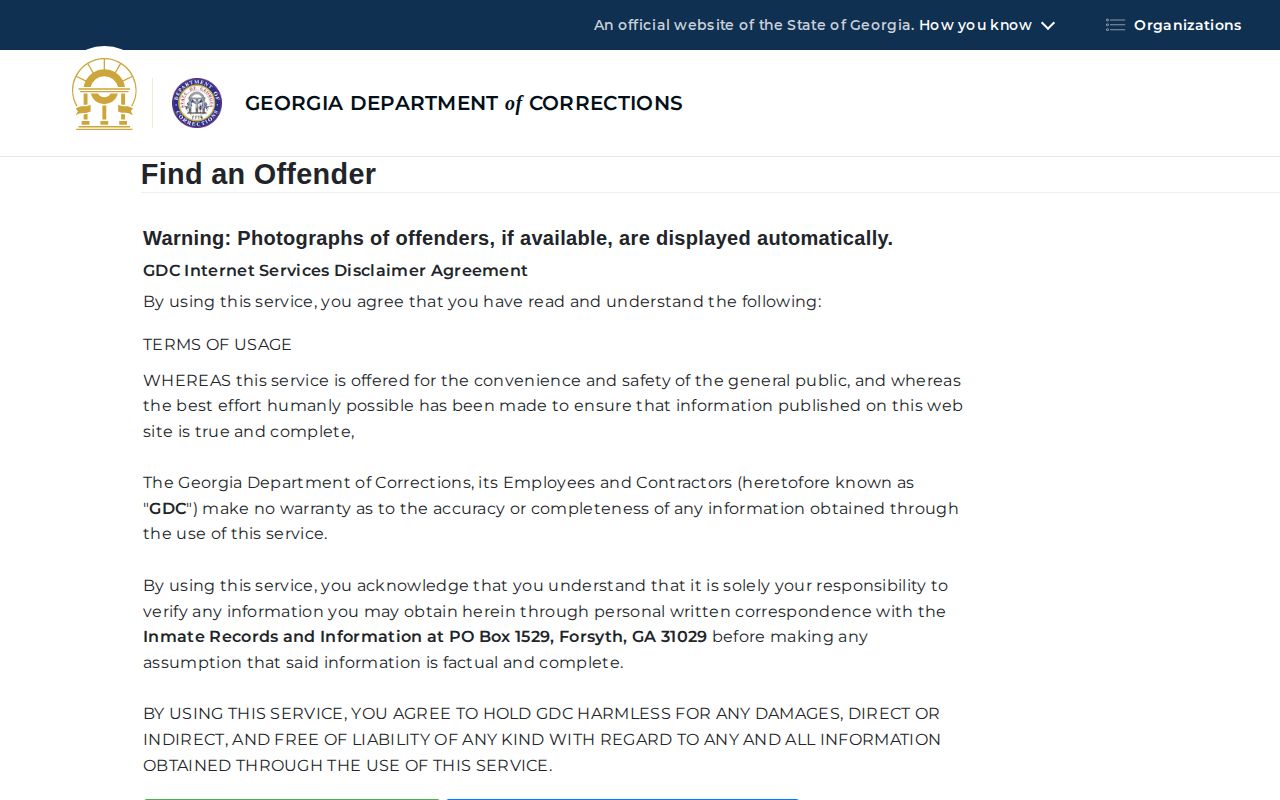
The GDC form belongs to a later custody stage than a Tift County booking. The county roster, court docket, and state profile should not be treated as interchangeable records.
Tift County Busted: Released Records
Where a person sits in the system decides where the record lives. A live roster works best for current county custody. A release view fits a recent departure. Tift County may still hold the booking record after the person is gone, while a state sentence shifts the primary record to GDC. A federal or immigration transfer moves the search to an entirely different locator.
| Custody state | Best first source | Photo and record caution |
|---|---|---|
| Just booked | Offender Index, Bookings Made in the Last 24 Hours | Processing lag is possible. Charges are charges. |
| In Tift County Jail | Current Inmates | Photo data may be configured, but no complete-photo guarantee exists. |
| Released within the recent window | Sheriff 48 Hour Release | A release list is not a disposition and is not every prior booking. |
| Released or older county booking | Booking-date history, then TCSO records request | Online history has no stated maximum. Retention is not web visibility. |
| Sentenced to state custody | GDC Offender Query | GDC is not a county booking archive. |
| Federal or immigration custody | BOP or ICE locator when the facts fit | BOP does not publish inmate photographs; ICE is not a criminal case index. |
Federal custody calls for different tools. The Bureau of Prisons locator applies only when someone is in BOP custody; it does not cover a Tifton arrest or publish any public booking photo. The U.S. Marshals Service fugitive information offers selected federal material, not a complete Tift warrant or booking list. For immigration holds, the ICE detainee locator is the right tool, but it should never replace the Tift roster.
Tift County First Appearance
A first appearance in Tift County is brief. It is not a trial. Magistrate Court uses the hearing to state the charges, explain constitutional rights, and confirm access to a lawyer. Nobody weighs evidence here. The judge either sets bond, when that court has the authority, or sends the bond question to the proper court. Hearings run almost daily, usually by video from 2:00 to 4:00 p.m. The public may sit in at the Magistrate Courtroom, 225 N. Tift Avenue, Suite 212. Times shift, so call first.
The schedule also explains why a bond figure on a roster can move quickly. Tifton's workflow has the arresting officer finish paperwork and hand it to the police clerk. Callers are asked to wait about an hour before asking about bond. Once cash bond is paid, the clerk writes a receipt. An officer then carries a release slip to the law-enforcement center. The money side and the roster side of a release do not always land together.
Each case ends up in the court that owns it. Felonies run through Superior Court. State Court takes most misdemeanors and traffic cases. Magistrate Court keeps warrants, first appearances, and preliminary duties. Municipal and Juvenile Courts follow their own rules. Pull the case number or booking paperwork first. Then search the Tift County Clerk or the Georgia Courts E-Access directory.
- Booking
- Jail intake after an arrest, including identification and custody data.
- Arraignment or first appearance
- A court stage where charges, rights, counsel, and sometimes bond are addressed. It is not a trial.
- Bond
- A court-ordered condition or payment tied to release while a case continues.
- Disposition
- The later court result, such as dismissal, acquittal, plea, conviction, or sentence.
- Record restriction
- A Georgia process that can limit eligible criminal-history access. It is not automatic destruction of every related record.
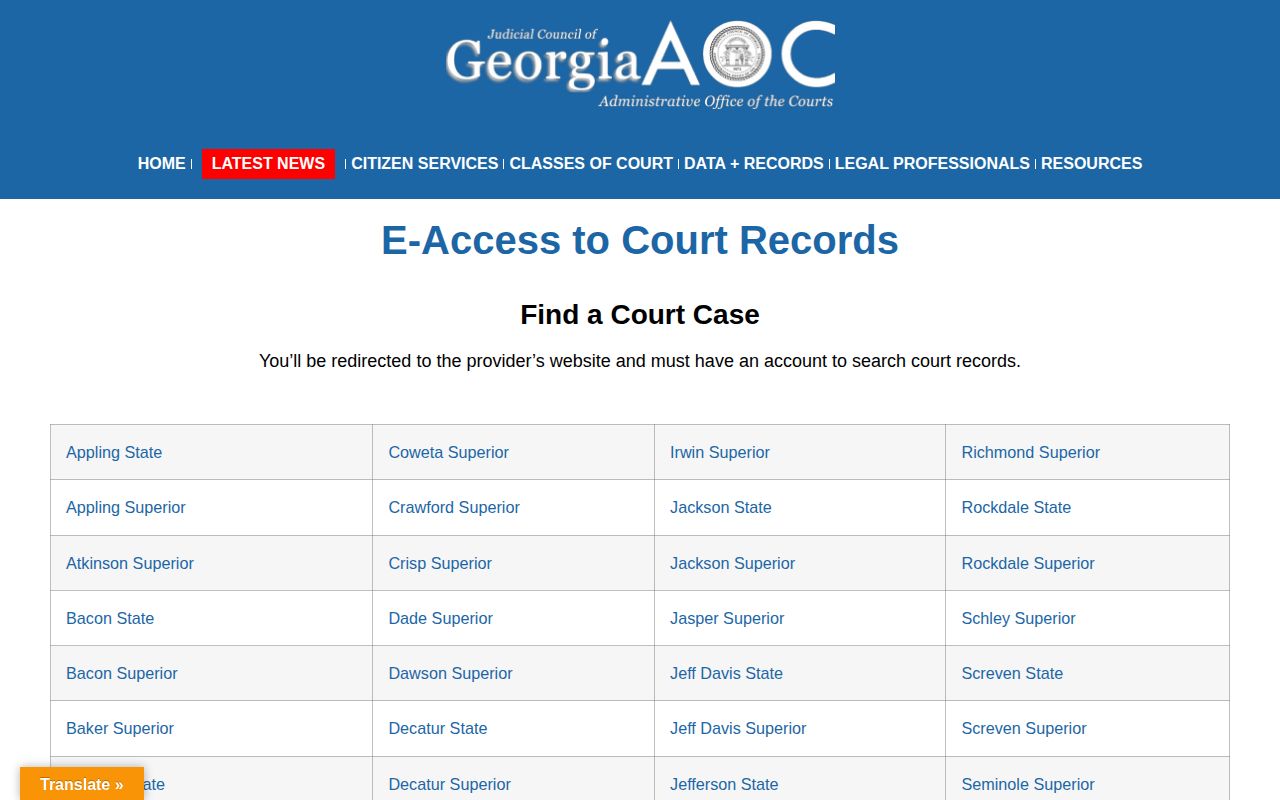
The court gateway is the next record channel when the question changes from who was booked to what happened in the case.
Tift County Busted Bond Timing
Tifton posts its own arrest-to-bond steps, and they help explain a brand-new jail entry. The officer books the person, finishes paperwork, and drops it with the police clerk. The city asks callers to wait roughly an hour before raising a bond question. That hour is about paper moving. It is not a promise that the Offender Index refreshes on the same clock.
After cash bond clears, the clerk hands over a receipt. An officer then delivers a release slip to the Tift County Law Enforcement Center. Because of that handoff, Current Inmates can still list someone briefly after the release goes through. The 48 Hour Release view may catch the departure later. One screen alone is never enough. Confirm status with the jail.
Note: a bond amount is a release condition, not a final case outcome, and the court still decides the case later.
Tift County Jail Activity Context
The sheriff describes the Tift County jail as a facility built in 1997 with more than 260 beds. It mainly holds people before trial. Local sentences and people awaiting state placement show up there too. That mix is why the word "inmate" tells you almost nothing alone. Someone could be freshly booked, waiting on a hearing, serving a short sentence, or marked for transfer.
The annual booking and release figures on this page came from a local public presentation and should be read as reported numbers. Bookings and releases are events, not people. One person can be counted several times through transfers, repeat bookings, or pretrial release. For who is in custody right now, use the live roster. For a legal outcome, go to the court docket.
Four search windows do the real work: Current Inmates, last-24-hours bookings, date-range history with previous inmates, and the sheriff's 48 Hour Release view. Keep them straight. Each answers a different question. Treating every hit as a fresh arrest muddies the picture.
Tift County Busted Alerts and App
The Tift County Sheriff's Office app for iOS and its Google Play listing are local communication channels published by the county board of commissioners and developed through OCV. Store information documents crime reports, tips, interactive features, and safety news. Launch coverage also described inmate lookup. The current store text does not promise that every inmate entry has a photograph, so confirm the live version before relying on an image.
For custody notifications, Georgia's VINE information can provide phone, web, or app updates in participating jurisdictions. It is a notification service, not a booking-photo source. A missing VINE result does not by itself disprove custody. The jail remains the custodian for booking records. State-sentence notifications use a separate Georgia victim-information path.
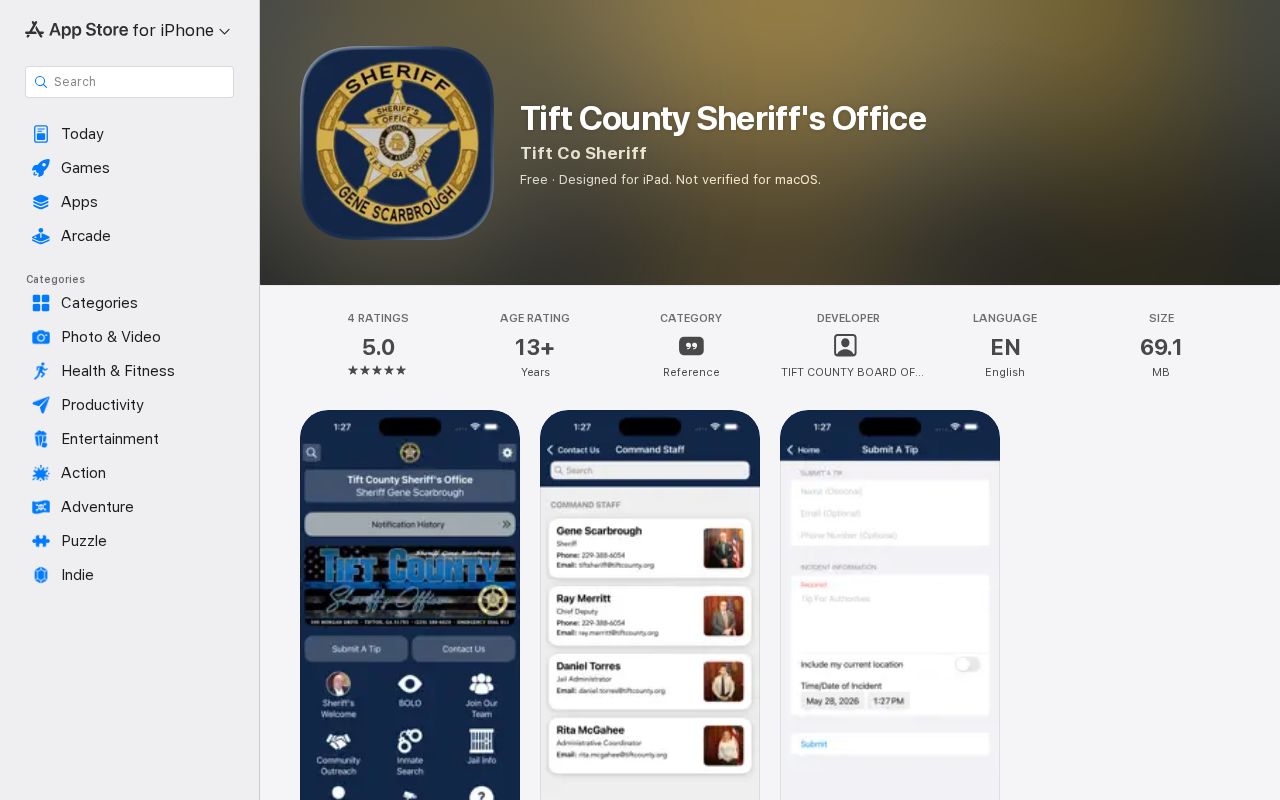
The app is a convenience channel for alerts and tips. It does not replace the official roster, a records request, or an emergency call to 911.
Tift County Court Branches
The booking record is the start of a case trail. A felony case generally moves through Superior Court. State Court commonly handles misdemeanors and traffic matters. Magistrate Court handles first appearances and warrant or preliminary functions. Municipal Court and Juvenile Court have distinct authority, and juvenile records carry special confidentiality rules.
Search by name and case number when available, then confirm the court that owns the file. For certified copies or a result that must be relied on, use the clerk rather than a news story or unofficial index. The Tift State Court clerk's record path supplies local court context. A court disposition can show a dismissal, acquittal, plea, conviction, or sentence that the booking screen cannot provide.
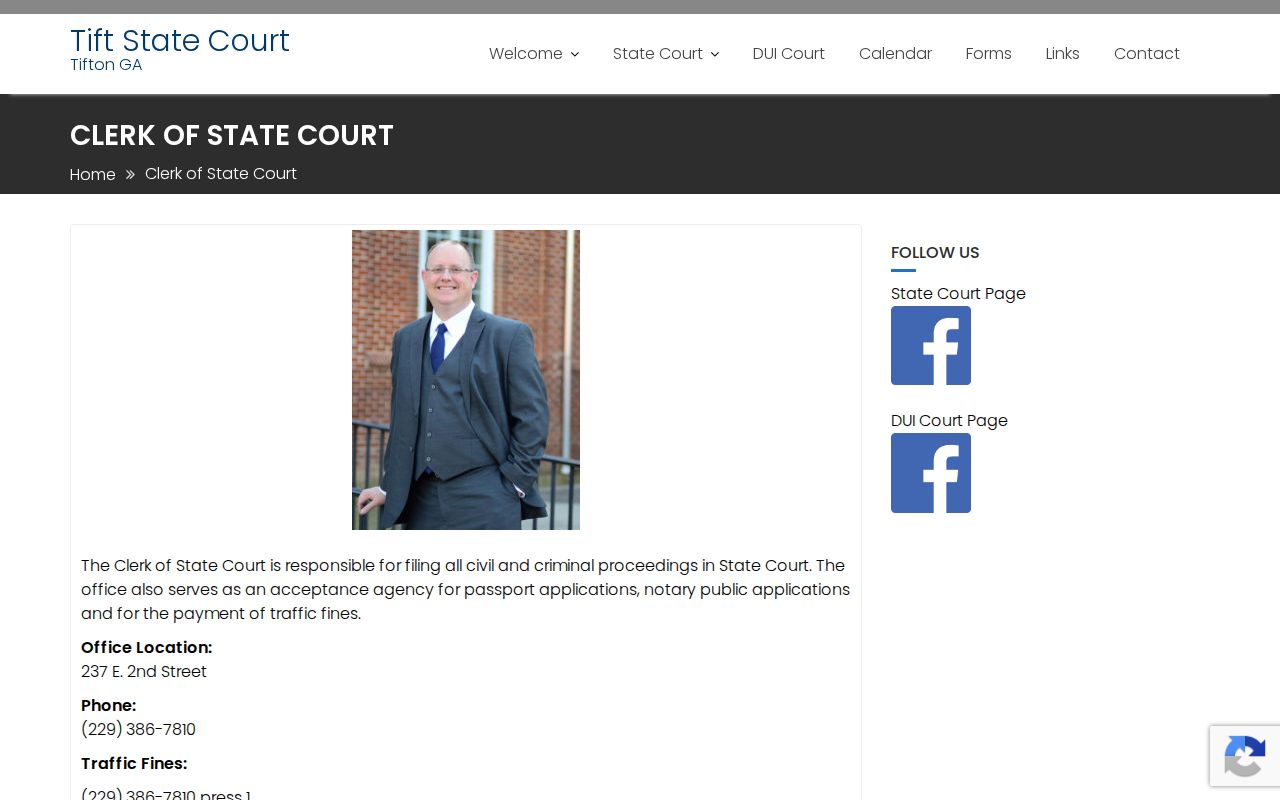
The State Court clerk is one local path for a disposition. The correct court depends on the charge and case assignment.
Tift County Custody Mix
Not every name in a Tift County Jail result means the same thing. One person may be held before trial. Another may be serving a local sentence. A third may simply be waiting for a state bed. None of that matches what you'd find through GDC, the BOP, or ICE, which each track a different kind of custody. The arresting agency matters too. An Omega address, for instance, sits on the Tift-Colquitt line. Location alone tells you nothing about which county handled the booking.
Use the federal locator only for a genuine federal case. Use the ICE locator only when immigration detention fits the facts. Neither will answer a routine question about someone Tifton Police booked. Go to the agency that owns the record.
Note: A negative result in one custody system can reflect transfer, release, a different county, or a filter mismatch rather than no arrest.
Old Tift County Booking Records
Georgia Archives' local-government schedule lists LG-19-060 Jail Booking Records, including associated booking data, for a minimum of 10 years after release. Jail registers have a 10-year period after the last entry. Holding-area video and daily incarceration lists have different periods. These are retention categories, not a promise that a record remains searchable online.
For an older booking, ask Tift County Support Services for the booking or release sheet, jail-register entry, and photo by name, date range, and arresting agency. Ask whether the record is in the active system or an older repository. If the county says the material transferred, request the receiving repository or identifier. Georgia Archives also provides retention schedules and historical finding aids, but historical state collections describe state custody and convictions rather than a current county mugshot feed.
The Georgia Archives jail-booking schedule provides the retention category used for older Tift records.
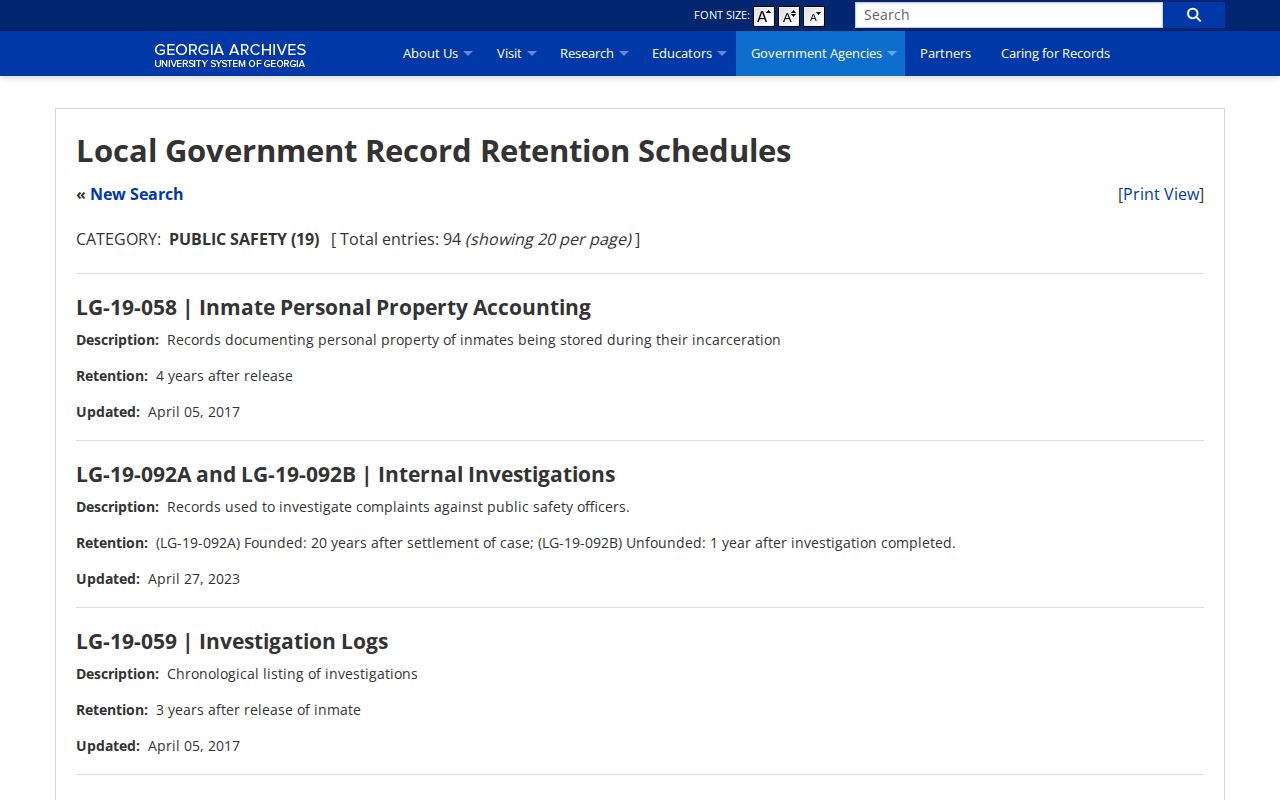
The retention schedule helps identify a records series. Tift County remains the first custodian for its jail booking material.
Tift County Busted Mugshots by City
Searching Tift County by city only works when you match the arresting agency to the booking county. Tifton Police bring city arrests to the shared county jail. Omega straddles the Colquitt County line. Ty Ty depends mostly on the sheriff. The city pages here supply that local agency context, but they do not create separate jail feeds or separate mugshot sources.
- Tifton Busted Mugshots: Tifton Police reports and event-driven News Flash items route to the county roster and records unit for jail material.
- Omega Busted Mugshots: confirm the county first because the incorporated city crosses the Tift-Colquitt line.
- Ty Ty Busted Mugshots: the sheriff provides primary law enforcement, so TCSO is the practical arrest and booking contact.
Two other paths round out the picture. Local coverage lives at Tift County Crime News & Mugshots, and the sheriff's selective wanted list sits behind its own safety-framed page at Tift County Most Wanted.